 Dellie
The Lab
Dellie
The Lab
The Lab
A fruit fly’s brain, a 3D-printed body.
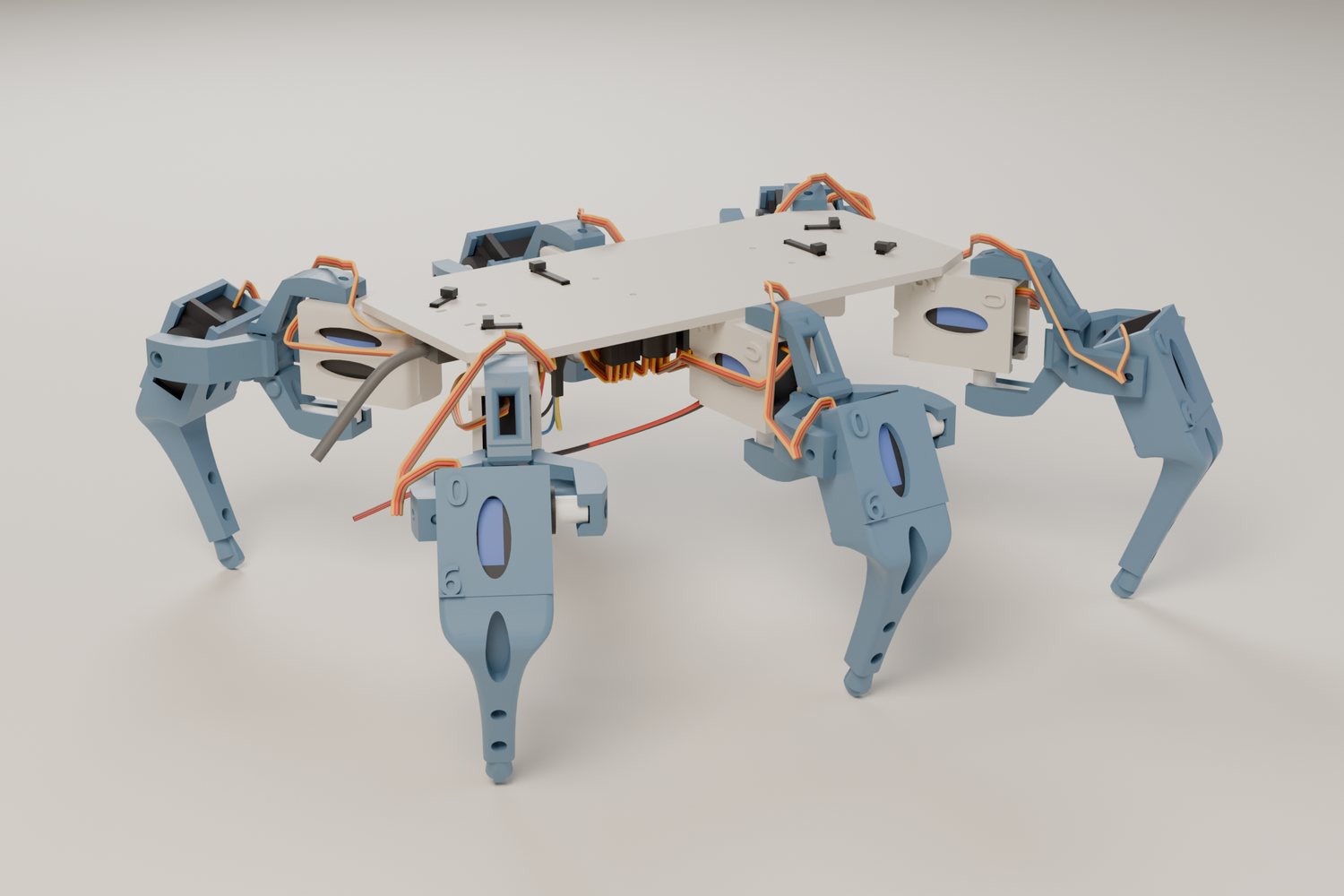
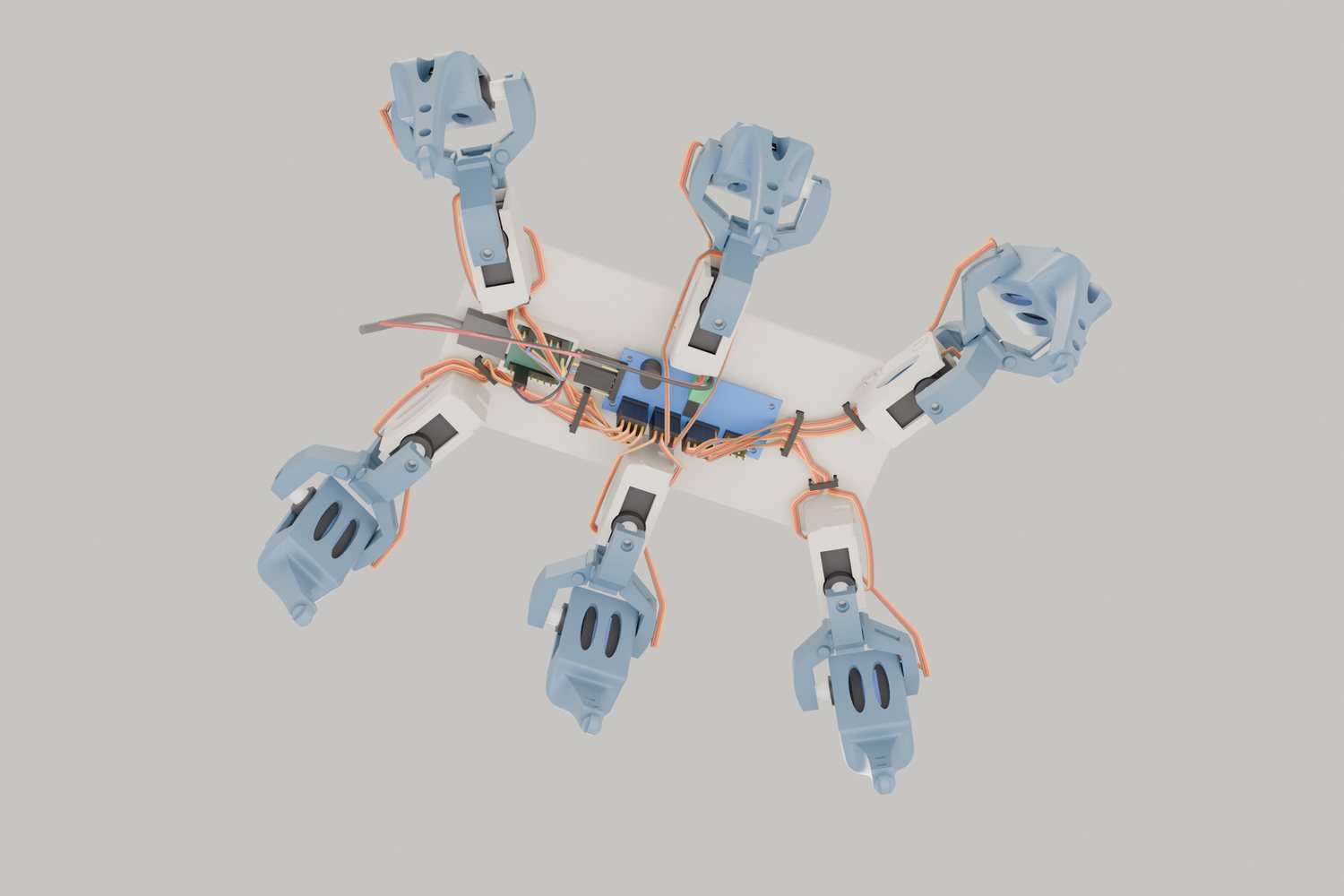
Dellie’s printer mostly makes gifts. At night it makes parts for something stranger: a robot driven by the brain of a fruit fly.
Scientists have mapped every nerve cell in a fruit fly and every connection between them, about 165,000 cells. I run that map as a brain on my computer and give it a simulated body.
Now I’m building it a real one, from printed plastic and small motors. These are my notes, in plain words, one episode at a time.
The episodes
September 2026. Four are written; the rest are on the way.
- 1
A fly brain you can download
Nobody wrote a rule that says “eat”. The wiring did it anyway.
Simulation12–13 September Read
- 2
Giving the brain a body
The test said “passed”. The tongue was curling the wrong way.
Simulation13–14 September Read
- 3
The fly that turned only left
We hunted a broken neuron in the map. The broken part was ours.
Simulation15–16 September Read
- 4
What’s still us?
How much of this fly is still us, quietly holding the strings?
Simulation16–21 September Read
- 5
From a gym thought to six legs
Wheels were the easy answer. A fly has six legs, and I have a 3D printer.
Design14–21 September Read
- 6
The day a motor listened to a fly
The page and the motor were following two different flies.
20 September
- 7
Measure, don’t trust
The power bank said 5 volts. The meter said 2.8.
20–28 September
- 8
The loose pin
A crashed laptop, and one wire that was never soldered.
27 September
- 9
“It’s working as hell”
At 1:33 a.m. the fly moved a real, printed leg. Then it shook like mad.
Real hardware20–28 September Read
- 10
Six legs on screen first
The animation showed the feet skidding, before a single part was printed.
28 September
Coming later · a course
Vibe Hardware: Voice to Bench
Say what you want to build. The AI helps you build it. The bench tells you the truth.
I’m turning these episodes into a course for people who can vibe-code but have never touched hardware.
We’ll work with 3D printing, small motors, a thumb-sized computer, a multimeter, and the habits that keep the AI honest.
How it’s made
One Bambu Lab A1, the same printer that makes Dellie’s gifts. A few small motors, a thumb-sized computer and a lab power supply on a desk in Da Nang.
A small team of AI assistants helps me. Claude plans the experiments and writes most of the code. Codex built the live browser page.
GLM and Grok review every experiment plan before it runs, and an automatic checklist (Jev) screens every plan and result for our usual mistakes.
Every test gets its pass-or-fail rule written down before it runs, a habit borrowed from medical trials (more in Episode 3).
What’s real
The brain map is real science, published by the teams who made it. The brain running on my computer is a simple model of it, and some parts are still written by hand. Every episode ends with a short list of what the wiring decides and what we wrote ourselves.
Other people are doing related work, and some of them got there first. I’ll say so where it matters.
On the bench
The whole stack, from the brain on the computer to the leg on the desk.
- A Mac and a PCThe Mac runs the fly for the leg; the PC with an RTX 5090 runs the big experiments.
- Seeed XIAO nRF52840 SenseThe thumb-sized computer, about 21 × 18 mm. It takes the angles over USB.
- PCA9685 servo boardDrives up to 16 servos. The six-legged robot needs 12.
- MG90S servosThe hip and the knee, with metal gears. Twelve more are on the way.
- Bench power supplyNICE-POWER SPS3010: a steady 5 volts for the servos, never more than 2 amps.
- Bambu Lab A1The printer that makes Dellie’s gifts. It printed the leg.
- MultimeterZoyi VC17B+. Every volt in these episodes was measured with it.