 Dellie
The Lab
Dellie
The Lab
Episode 5 of 10 · 14–21 Sep 2026 · 5 min read
From a gym thought to six legs
Wheels were the easy answer. A fly has six legs, and I have a 3D printer.
Design and one printed partNo brain touches the robot yet.
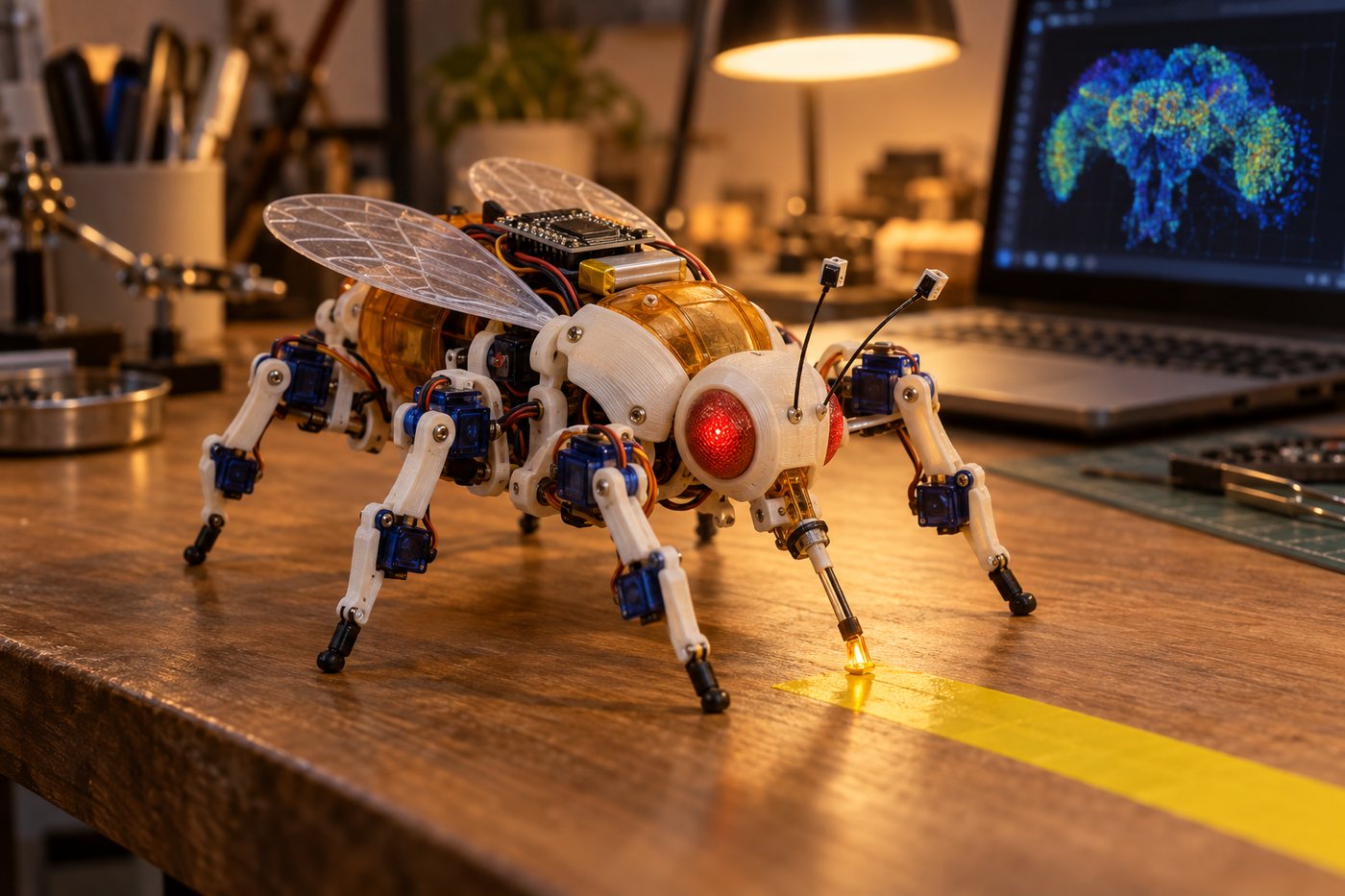
At the gym
By 14 September the fly lived in a web page: you drop sugar, he walks over and eats (Episode 2). Between sets at the gym I wondered whether he could live somewhere more real.
“How fun, and how complicated, would it be to build the fly a robot and connect this brain, so we can watch his behaviour not in the playground but in the real world?”
Wheels first
The first answer came a minute later, and it was sensible: a small car on wheels, with two smell sensors sticking out like antennae. It had been done before with a worm. In 2014 the OpenWorm project put a roundworm’s wiring map on a Lego robot, and it moved and stopped the way a worm does.
I asked for a picture of it, and the picture looked wrong to me.
“But why is it on wheels and not on six legs, which is much closer to a fly? I have a 3D printer, an A1.”
Six legs, twelve motors
With a printer, six legs are realistic. The plan became two small motors per leg: a hip that swings the leg forward and back, and a knee that lifts the foot. Six legs, twelve servos.
A real fly’s leg has many more joints. Two is the smallest number that can walk, and each of the six leg groups the brain already drives gets a leg of its own.
The same night the robot got a plan, in six steps. The first step is one leg, not a robot.
- One printed leg, stepping.
- All six legs on a body.
- No cable: the robot talks to the computer wirelessly.
- Senses: touch and motion sensors.
- The brain plugged in.
- Eyes like a fly’s.
A spider, or a fly?
The next day the first design we picked came back from the research. It was a popular printable robot, and it looked like a spider.
“It looks like a spider, very symmetrical. I don’t see where the head is and where the tail is.”
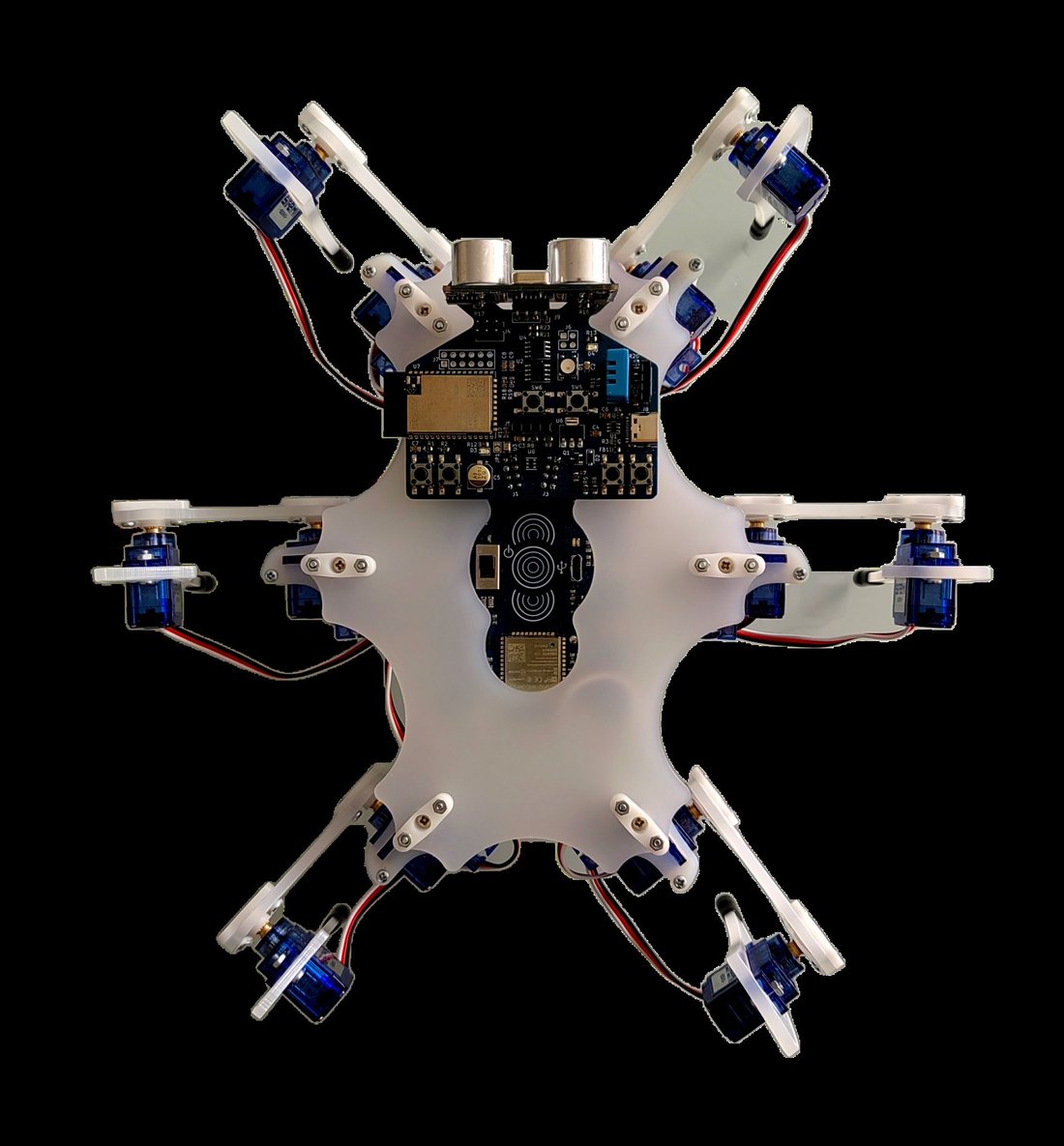
A spider-style robot
The legs spread evenly around a round body. Front and back look the same. It turned out to need 18 motors, three per leg.
A fly
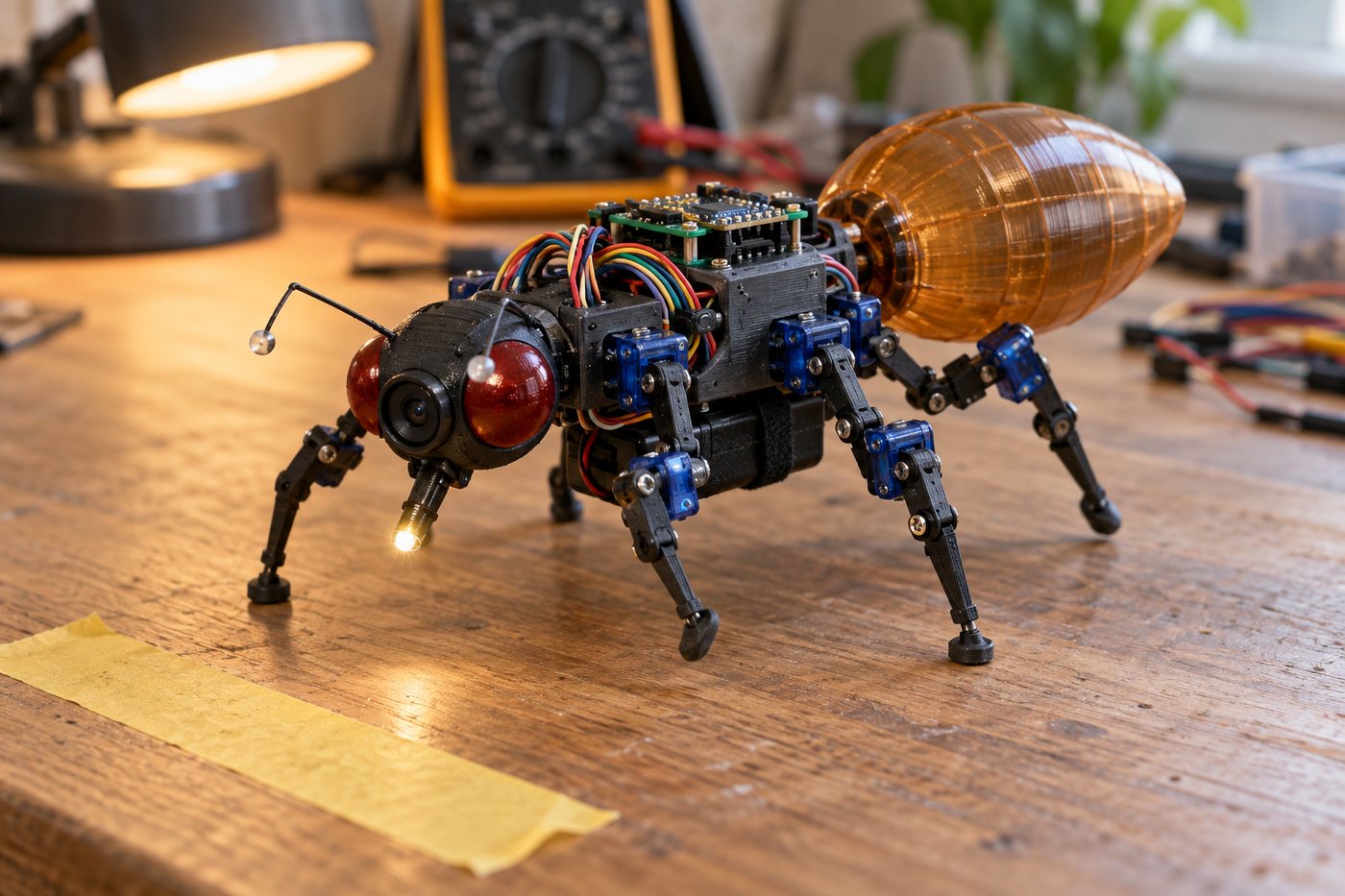
A head, then the thorax, which carries all six legs, then an abdomen with no legs at all. That’s what makes a fly look like a fly.
Insect-shaped six-legged robots do exist, but most use 18 motors or are sold as kits. The proven printable ones with 12 motors have round bodies.
So we split the problem. The legs come from a proven open design, the Vorpal hexapod, built by many people before us. The body we design ourselves, shaped like a fly.
“You’re probably right about the proven ones.”
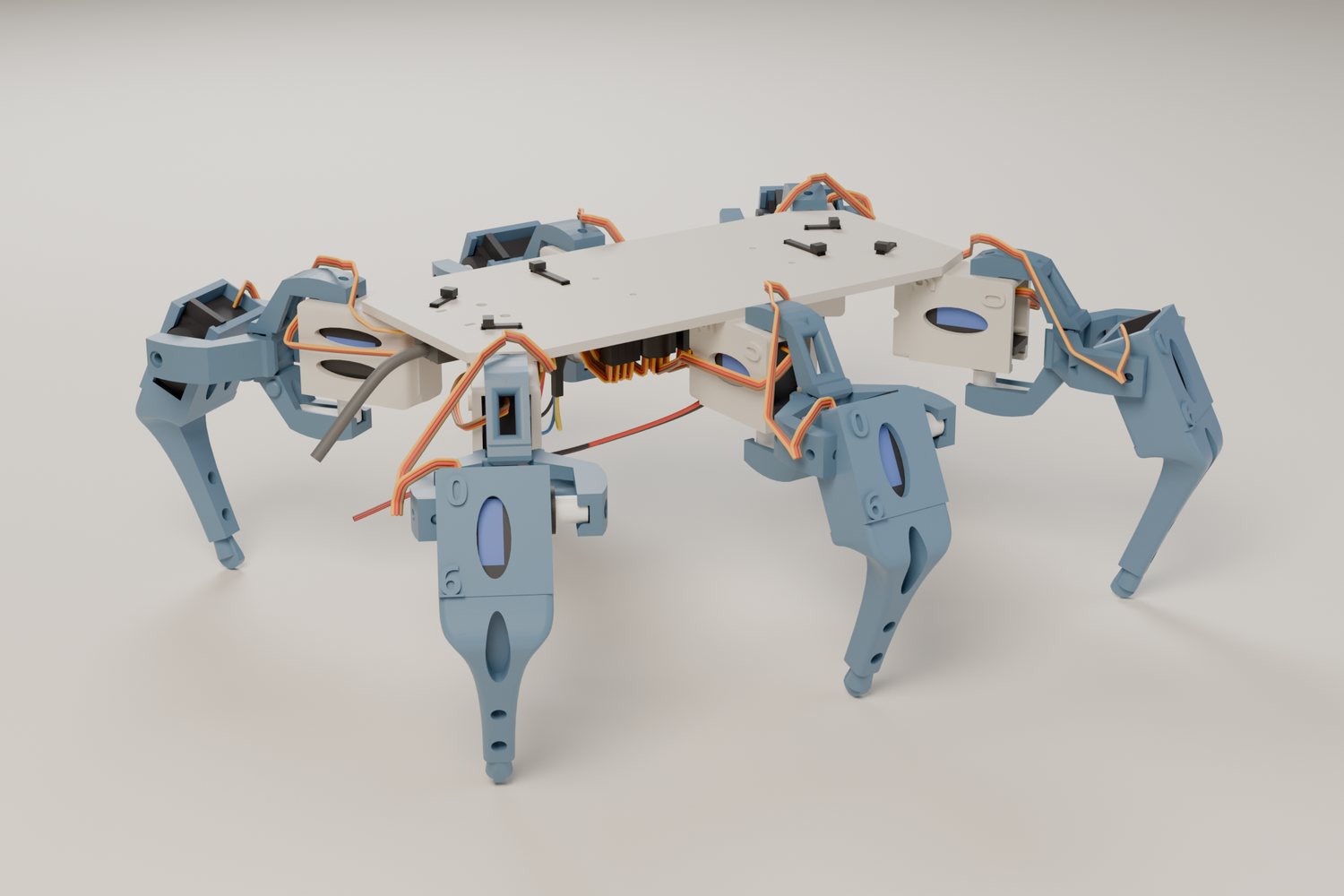
Leg 1 of 6
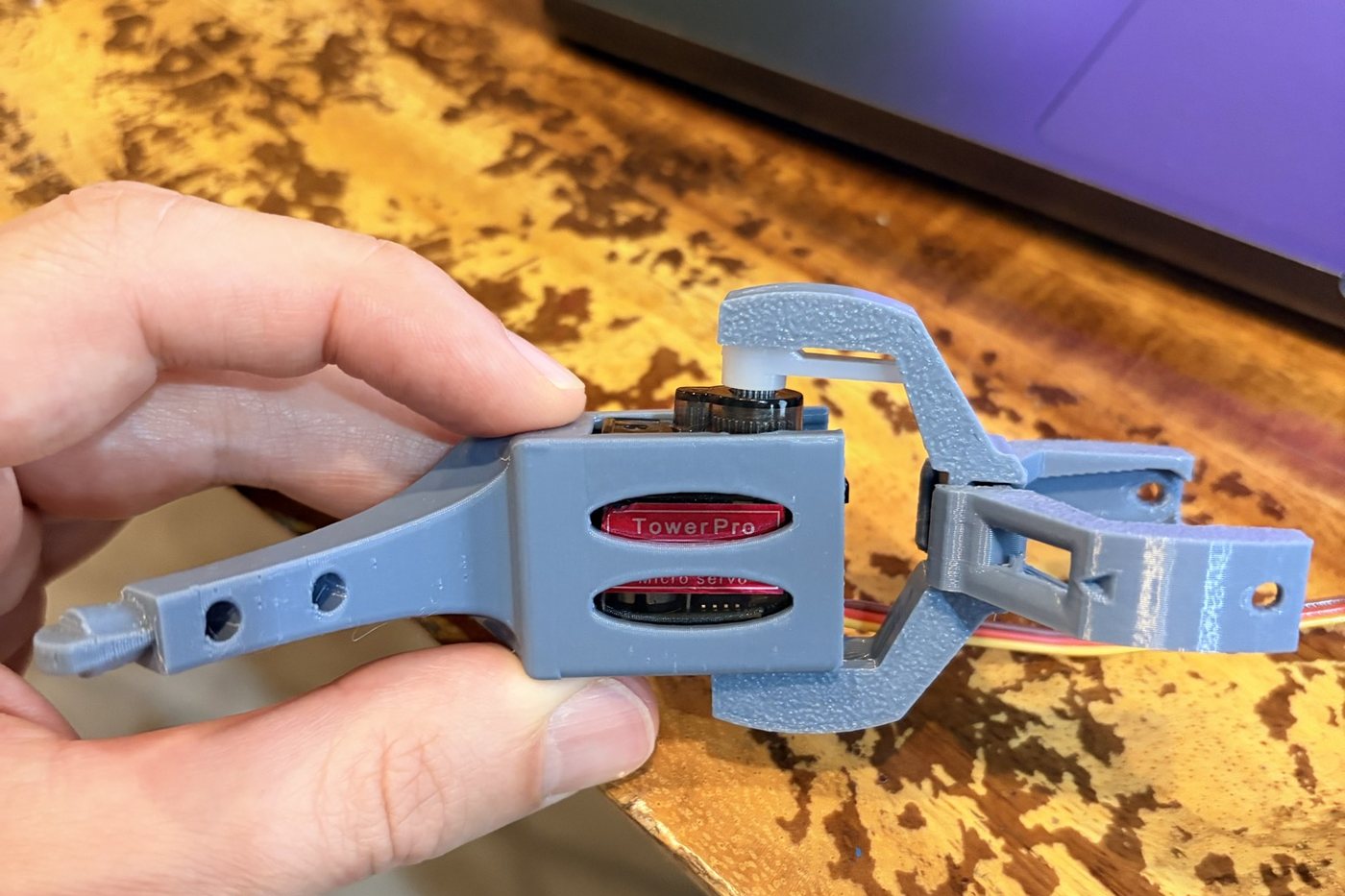
Two motors were already bought. On 21 September at 13:38, the first leg came off the printer: three parts, the leg and the two halves of its hinge, printed on the same A1 that prints Dellie’s gifts.
A week later the whole leg moved with the fly on the screen. That’s Episode 9.
Borrow the parts others have proven. Design only the part that makes it yours.